 Skip to main content Skip to footer
Dental Implants in Issaquah, WA
If you’re missing one tooth, several teeth, or need to replace a full arch, dental implants are the closest thing dentistry has to growing your teeth back. Unlike a bridge or removable denture, an implant replaces the root of the tooth, not just the crown you see when you smile, which is why implants look, feel, and function more like natural teeth than any other replacement option.
At The Issaquah Dentist, Dr. Ron Sherman provides dental implants in Issaquah, WA, as part of a full range of general, cosmetic, restorative, and preventive dentistry. Whether you’re missing a single tooth or considering full arch replacement, our Issaquah dental office walks you through candidacy, cost, and treatment planning so you know exactly what to expect before you commit to anything.
Ready to get started? Contact our dental office in Issaquah at (431) 391-4964 to schedule your dental implant consultation. We welcome patients in Issaquah and surrounding areas like Sammamish, Bellevue, Newport, Seattle, and many more.
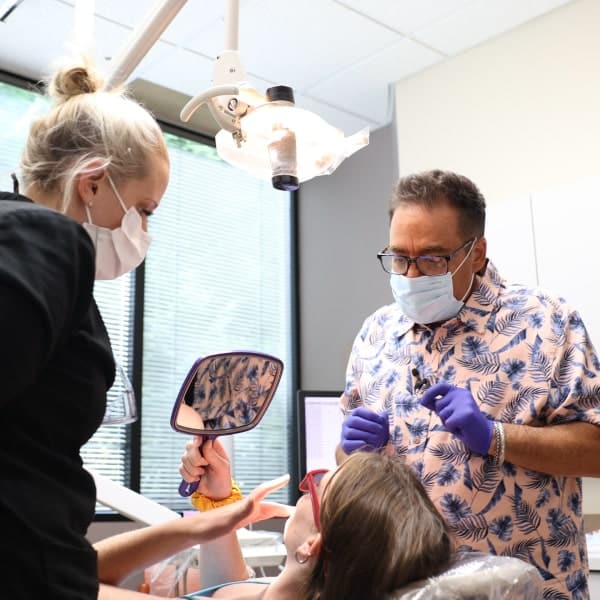
What Are Dental Implants for and How Do They Work?
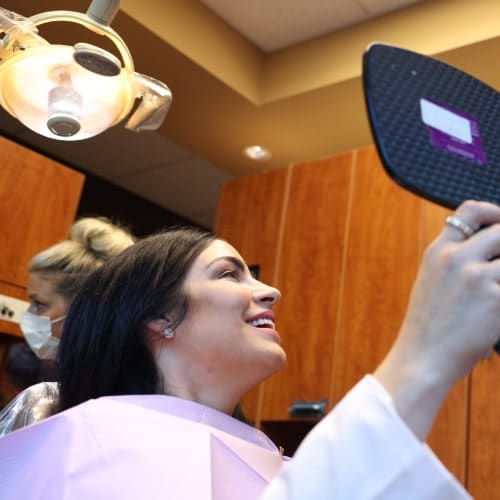
A dental implant is a small titanium post placed directly into the jawbone, where it functions as an artificial tooth root. Dentists use titanium because it’s biocompatible. Over time, the bone fuses to it in a process called osseointegration, which gives implants their signature stability. Once healed, an abutment connects the implant post to a custom-made dental crown, dental bridge, or denture, depending on how many teeth you’re replacing.
Because implants integrate with bone rather than resting on the gums or relying on neighboring teeth for support, they also help preserve jawbone structure—something bridges and traditional dentures can’t do. Bone loss is one of the most overlooked consequences of missing teeth, and it’s a major reason more patients are choosing implants over removable options.
Who Is a Candidate for Dental Implants?
Most healthy adults with one or more missing teeth are candidates for dental implants. During your consultation, we review your medical history, take digital imaging of your jaw, and evaluate three main factors:
- Bone Density and Volume: Is there enough healthy bone to support an implant?
- Gum Health: Active gum disease needs to be treated before implant placement
- Location of the Missing Tooth or Teeth: This affects both technique and healing time
Certain habits and conditions, such as smoking, uncontrolled diabetes, and untreated periodontal disease, can affect healing and long-term implant success, so we’ll talk through those openly during planning rather than after the fact.
Bone Grafting and Sinus Lift Augmentation
If imaging shows you don’t have enough bone volume, that doesn’t rule out implants; it just means we build the implant site first. Bone grafting adds material to weak or thin areas of the jaw to build a stronger foundation. In the upper jaw, where the sinus cavity sits close to the tooth roots, a sinus lift (sinus augmentation) may be needed to create enough vertical bone height for a successful implant.
These preparatory procedures add time to treatment, but they meaningfully improve long-term outcomes. Rushing an implant into insufficient bone is one of the more common reasons implants fail elsewhere.
Please note that we currently provide bone grafting treatment.
Titanium Implants and Full Arch Solutions
Titanium remains the gold standard implant material because of its strength, biocompatibility, and decades-long track record of predictable osseointegration.
For patients missing all or most of their teeth in an arch, full-arch implant solutions, sometimes placed with as few as four strategically positioned implants, can support a fixed, non-removable prosthesis rather than a traditional full denture.
This has become one of the fastest-growing areas of implant dentistry, and it’s worth discussing during your consultation if removable dentures haven’t worked well for you in the past.
Dental Implants Compared to Bridges and Dentures
It’s a fair question: why choose an implant over a dental bridge or dentures?
- Bridges rely on the healthy teeth on either side of the gap for support, which means those teeth have to be reshaped and take on extra load—potentially shortening their lifespan.
- Dentures rest on the gums and can shift while eating or speaking, and they don’t stop the bone loss that continues after tooth loss.
- Implants stand on their own, place no stress on adjacent teeth, and actively help preserve the jawbone.
For patients who’ve had a tooth removed and are weighing their options, our tooth extractions page covers what to expect if extraction needs to happen before implant planning begins.
The Dental Implant Procedure:
From Consultation to Final Restoration
Understanding the timeline for dental implants is key to planning your treatment effectively. Each stage of the procedure is carefully designed to ensure long-term stability and a natural-looking result. Here’s what you can expect at our Issaquah dental office:
Dental Implant Procedure
- Consultation and Imaging: We review your goals, take 3D imaging, and build a treatment plan specific to your bone structure and the number of teeth being replaced.
- Implant Placement: The titanium post is placed into the jawbone under local anesthesia (sedation options are available for anxious patients).
- Healing (Osseointegration): Over the following months, the bone fuses to the implant. This phase typically takes longer in the upper jaw than the lower jaw.
- Final Restoration: Once healing is complete, an abutment and custom crown, bridge, or implant-supported denture are attached and matched to your natural teeth in shape and shade.
Recovery and Healing Timeline
Mild swelling or soreness for a few days after surgery is normal and manageable with over-the-counter pain relief. Most patients return to normal activities within a day or two, while the bone-to-implant healing process itself continues quietly in the background for several months.
Following your post-op instructions—soft foods early on, good oral hygiene, and attending follow-up visits—directly affects how predictably that healing goes.

How Much Do Dental Implants Cost? Insurance and Financing
Implant cost depends on how many teeth you’re replacing, whether you need bone grafting or a sinus lift, and which final restoration (crown, bridge, or full arch prosthesis) you choose—so we build out real numbers during your consultation rather than quoting a one-size-fits-all price online.
Dental insurance sometimes covers part of the process, particularly the restorative crown, and we’re happy to help you understand your specific plan’s coverage. For costs insurance doesn’t cover, we also offer financing options so you can phase treatment in a way that fits your budget.
Meet Your Issaquah Implant Dentistry Team
Dental implant treatment draws on surgical skill, restorative expertise, and a solid understanding of oral anatomy—which is why implant dentists typically complete training beyond dental school. At The Issaquah Dentist, Dr. Ron Sherman personally reviews every implant case. When a patient’s situation calls for it, we coordinate care with a trusted periodontist or oral surgeon rather than forcing every case into a one-size-fits-all workflow. That’s the kind of continuity of care that’s harder to find once you start searching “implant dentist near me” and comparing offices that have never met you.
Patient reviews consistently point to the same thing: patients want a dentist near them in Issaquah who explains what’s happening and why, not just a provider who places implants and moves on to the next patient.
Frequently Asked Questions
How much do dental implants cost in Issaquah, WA?
Cost varies by case—how many teeth you’re replacing, whether bone grafting is needed, and the type of final restoration all factor in. We provide a personalized estimate after your consultation and imaging, and we’ll walk you through insurance and financing options then.
Are dental implants painful?
Implant placement is done using local anesthesia to numb the surgical area so patients don’t feel the procedure itself. Afterward, mild soreness or swelling for a few days is normal and typically manageable with over-the-counter medication.
How long do dental implants last?
With proper care, meaning brushing, flossing, and regular dental visits, implants are designed to last for decades, and many patients keep them for life.
Do you accept dental insurance for implants?
Many dental insurance plans offer partial coverage, particularly for the restorative crown portion. We’ll review your specific benefits with you and discuss financing for anything insurance doesn’t cover.
How do I find the right implant dentist near me?
If you’re looking for an implant dentist near you, look for continuity of care. Meaning a dentist in Issaquah who personally reviews your case, coordinates with specialists like a periodontist when needed, and is available for follow-up, rather than a practice where you see a different provider at every visit.
Schedule Your Dental Implant Consultation in Issaquah
Dental implants are one of the most predictable, long-term ways to replace missing teeth and protect your remaining oral health. If you’re ready to explore whether implants are right for you, contact us at (425) 391-4964 to schedule a consultation with The Issaquah Dentist today. We welcome patients in Issaquah and surrounding areas like Sammamish, Bellevue, North Bend, Redmond, and many more.

"*" indicates required fields